

NATURE-BASED WATER TREATMENT
Field System
A passive, scalable water quality treatment platform that removes phosphorus, nitrogen, and color from large volumes of water, without the footprint of a wetland. All SWIG systems can be utilized for off-site stormwater credit, BMAP/TMDL allocations, and Water Quality Enhancement Area for nutrient banking.
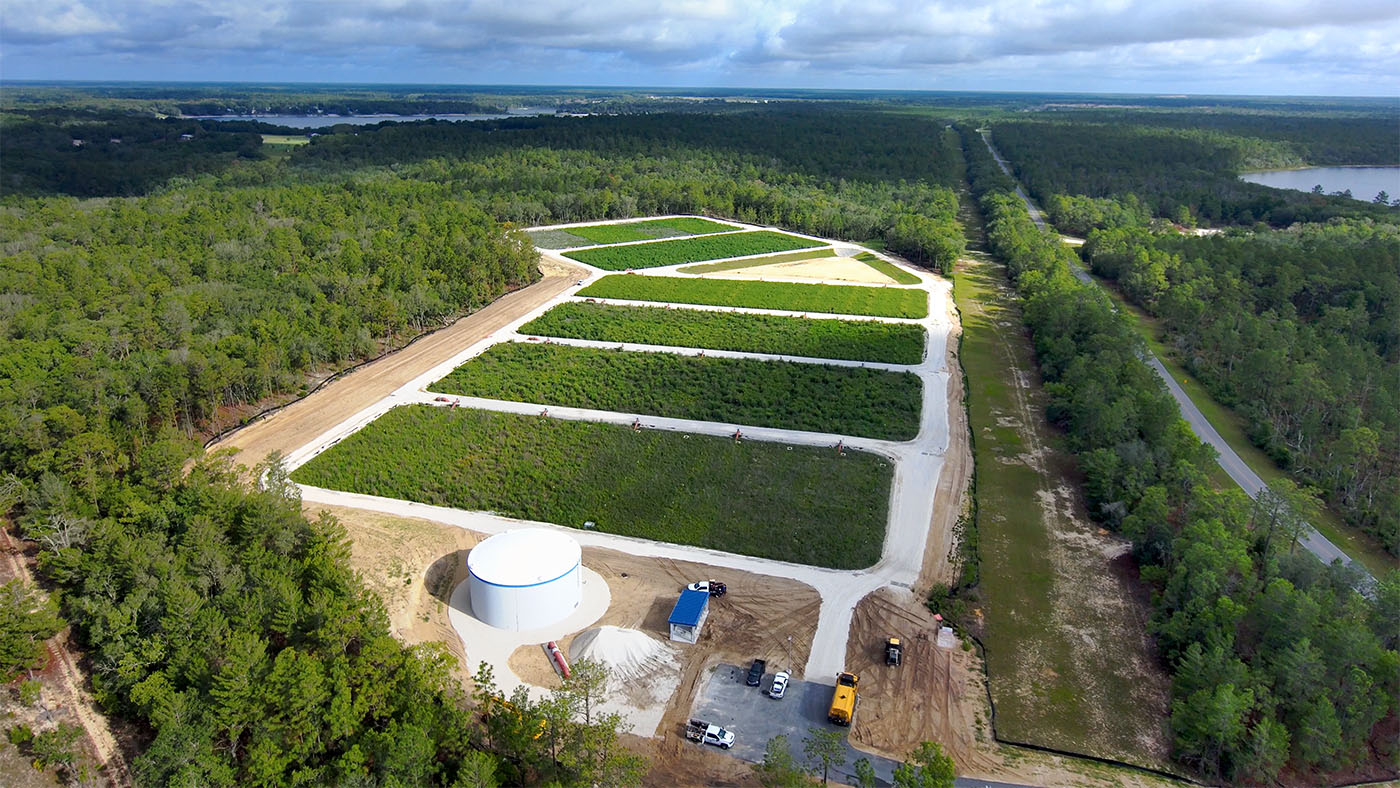

Overview
What is the field system?
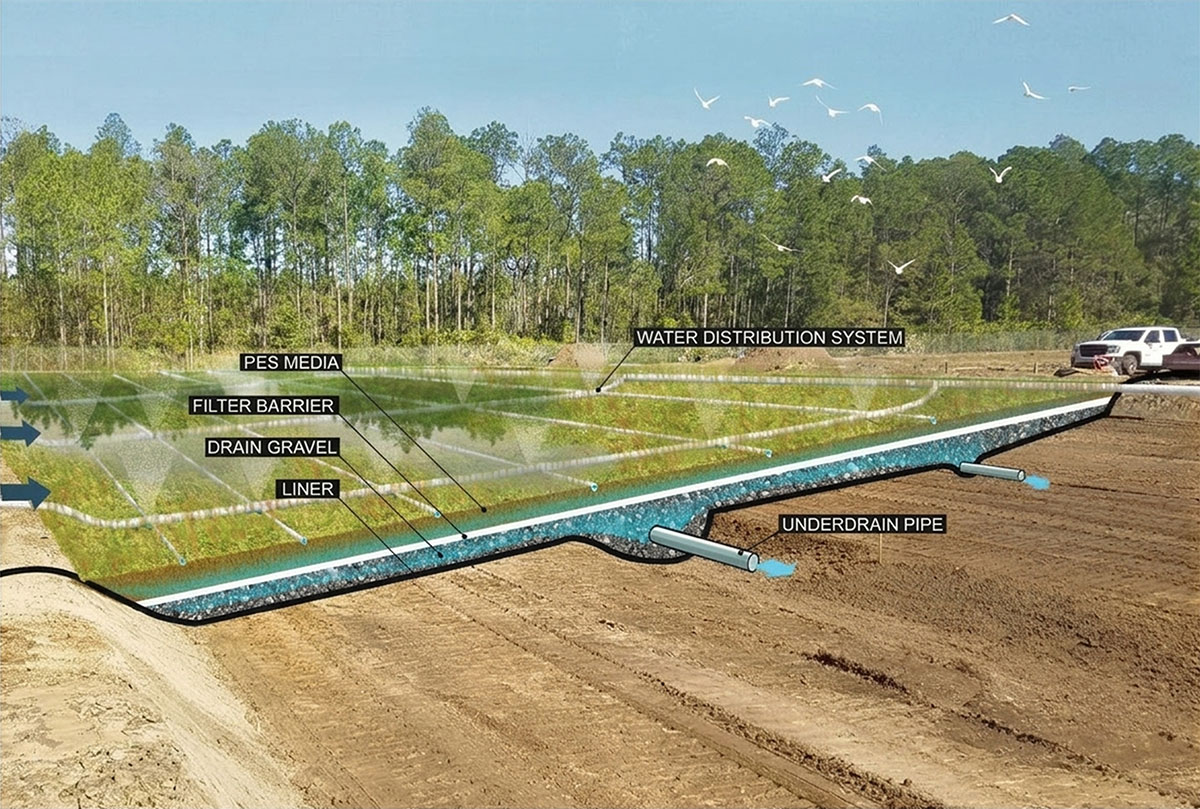
The field system is a nature-based, passive treatment technology engineered to process large volumes of water at scale. These systems can be configured with any SWIG media type depending on the target parameter, whether phosphorus, nitrogen, color, or a combination, allowing for flexible, site-specific treatment solutions.
While field systems also create wildlife habitat and may resemble wetlands in appearance, they are fundamentally different. Unlike wetlands, field systems are unsaturated systems that operate without standing water yet treat a similar volume of water at a footprint up to 90% smaller. Notably drought-tolerant, they are ideally suited for watersheds with variable hydrology.
FULL-SERVICE PROJECT SUPPORT
Design and operations services
SWIG provides a complete suite of design and operational support services, ensuring field systems are properly sized, permitted, and performing from day one through the life of the project. Our team works directly with clients from initial feasibility through long-term operations, reducing the burden on project owners and ensuring treatment goals are consistently met.
Services include:
- Feasibility assessment — site evaluation and preliminary sizing based on target parameters, flow volumes, and available land area
- Hydraulic and treatment design — detailed system sizing, media selection, and hydraulic loading calculations tailored to site-specific conditions
- Site layout and engineering drawings — construction-ready design documents for permitting and contractor use
- Permitting support — technical documentation and agency coordination to support regulatory approvals
- Construction oversight — on-site support during installation to ensure design intent is met
- System operations, maintenance, and performance monitoring — remote system control, scheduled maintenance, real-time performance tracking, and regular reporting to verify treatment targets are consistently achieved.
HOW IT WORKS
Treatment process
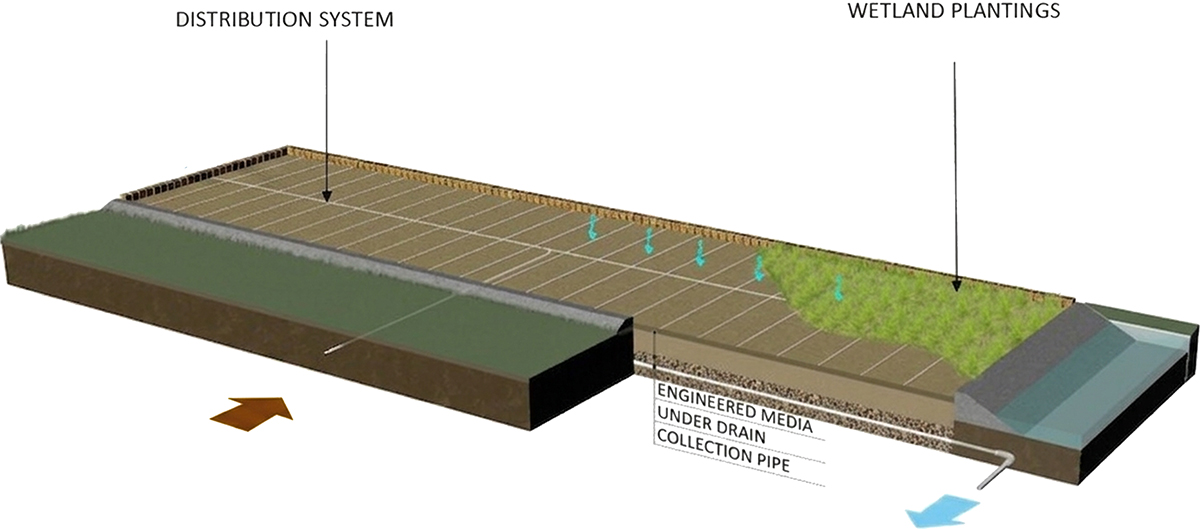
Water is conveyed to the field
Influent water is pumped to the system and distributed evenly across the vegetated media surface.
Media adsorbs target parameters
As water passes through the unsaturated SWIG media layer, phosphorus is adsorbed, and bioavailable nitrogen is removed by denitrification.
Treated effluent is collected
Treated water is collected at the base of the system and conveyed to the discharge point or next treatment stage.
PERFORMANCE
System capacity
| Parameter | Low end | High end |
|---|---|---|
| Hydraulic loading rate (ft/day) | 3 ft/day | 6 ft/day |
| Flow rate per acre (MGD) | 1.0 MGD | 1.5 MGD |
Assumes 80% operational uptime. Actual performance varies by target parameter and media configuration.
KEY ADVANTAGES
Why choose a field system?
- Drought-tolerant. Designed to maintain performance even under low-flow or dry conditions.
- Fully automated. Systems operate automatically and are controlled and monitored remotely.
- Remote-ready. Ideally suited for installation in remote settings without on-site operators.
- Compact footprint. Treats equivalent volumes to a wetland at up to 90% less land area.
- Configurable media. Compatible with any SWIG media blend based on your target parameter.
- Performance tracking. Systems can be directly monitored to verify treatment outcomes.
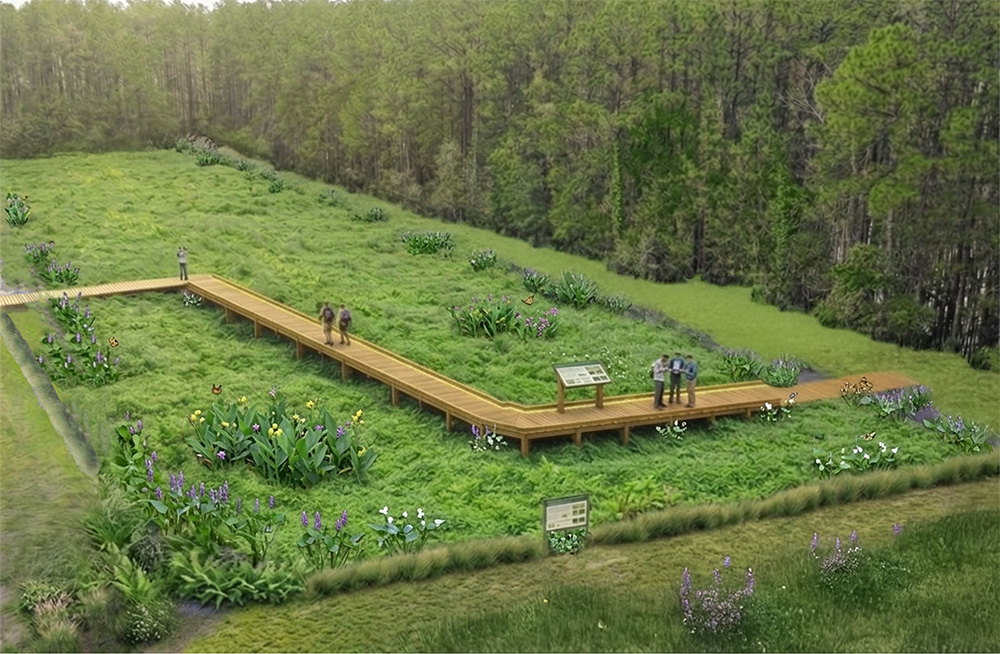
- Public Benefit. Field systems can be fitted with boardwalks and education signage to create community amenities.
OPERATIONS and MAINTENANCE
Low-maintenance by design
Field systems are designed for long-term, low-intervention operation. O&M activities include:

Electrical Costs
Associated with pumping influent water through the system.

Water Quality Sampling
Periodic sampling to verify treatment performance and regulatory compliance.

Annual Vegetation Management
Conducted using low ground pressure equipment to protect the integrity of the underlying media structure.
MORE INFORMATION
MEDIA REPLACEMENT
Long-life media with end-of-life reuse
SWIG field system media is engineered for durability, with design lifetimes ranging from 5 to 15 years depending on influent phosphorus loads. Lower influent concentrations extend media life toward the upper end of this range.
When media reaches adsorptive capacity, it is removed and beneficially reused as an agricultural soil amendment, consistent with SWIG’s cradle-to-cradle approach.
Longevity: Systems treating lower phosphorus concentrations experience slower saturation, maximizing media life and deferring replacement costs.
Design consideration: While SWIG media blends have high infiltration rates, high suspended sediment loads can impact longevity and performance. Pre-treatment should be evaluated where needed.